




Humanoid Robots Are Entering a New Stage
The humanoid robot industry is moving fast. In 2026, the focus is shifting from technology validation to early commercialization. China, North America, and Asia’s supply chain are all pushing the industry forward. The competition is no longer just about the robot itself. It’s about AI models, key components, computing power, and the supply chain behind them. Humanoid robots are becoming one of the key applications of Physical AI. It will be interesting to see how this industry develops from here.

Is This the Next DeepSeek Moment?
China’s open-source AI race is moving fast. On July 27, Moonshot AI officially open-sourced the weights of its flagship model, Kimi K3. With 2.8 trillion total parameters, it is now one of the largest open-source AI models in the world. And the momentum didn’t stop there. 🔹 DeepSeek released DeepSeek V4 Flash on July 31🔹 Alibaba Cloud launched Qwen 3.8 Max on August 3 The rapid releases are sparking discussions about whether we’re seeing another “DeepSeek moment” — and a new phase in the growing AI competition between China and the US. One thing is clear: the pace of AI development is only getting faster. Source: TrendForce, August 2026
China’s Semiconductor Supply Chain Is Becoming a Bigger Part of the Global Market
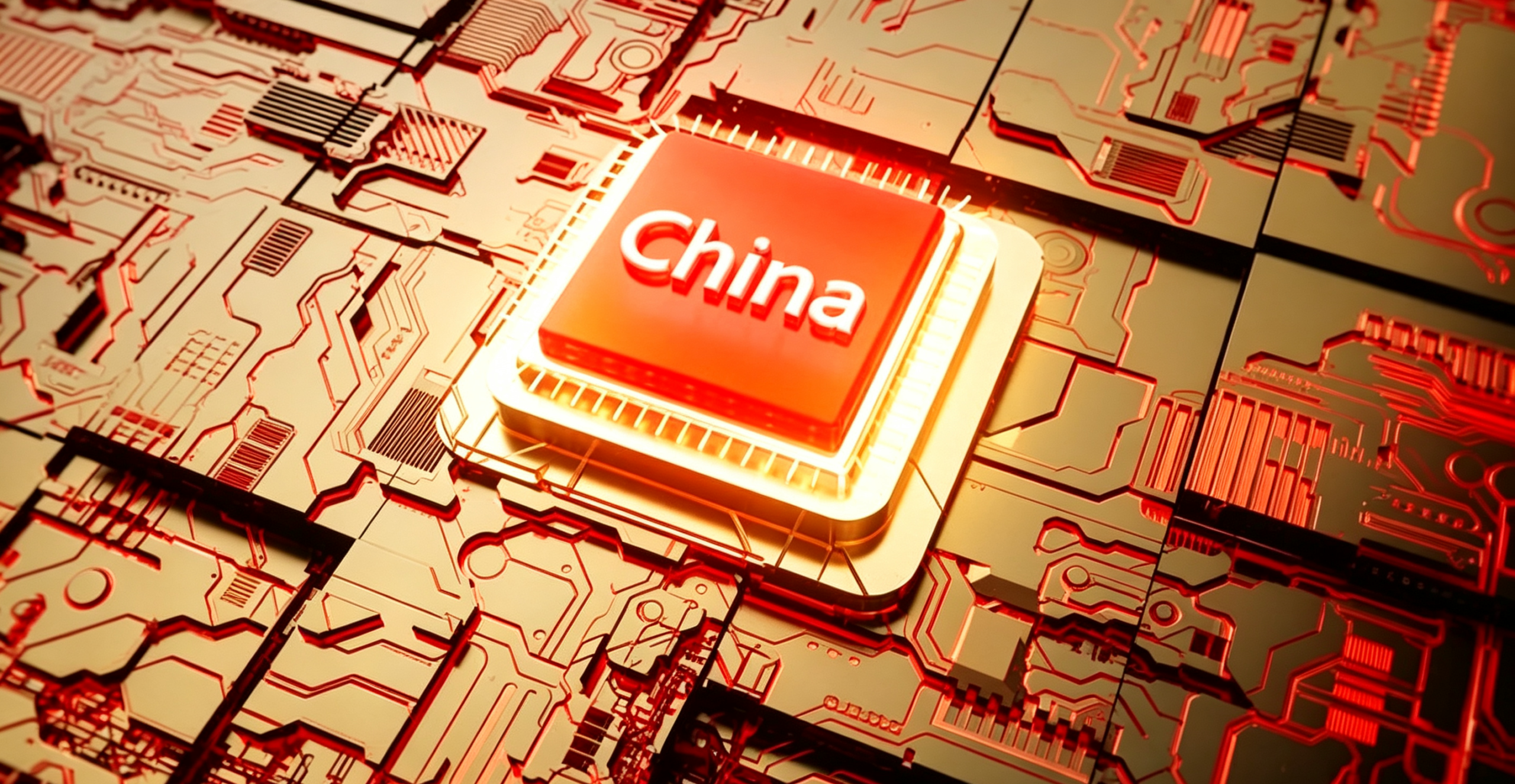
The semiconductor industry is entering a new phase where supply chain capability is becoming just as important as chip technology. According to recent customs data, China exported approximately 179.4 billion integrated circuits in the first half of 2026, with an export value of around $177.3 billion, representing significant year-over-year growth. Behind these numbers is a broader industry trend: The global electronics market is becoming more diversified, with companies looking for: ✅ Reliable component sources✅ Flexible supply chain solutions✅ Faster response to market changes✅ Alternative sourcing channels From semiconductor manufacturing and packaging to electronic component distribution, China continues to play an important role in the global electronics ecosystem. For OEMs, EMS companies, and purchasing teams, the key challenge is no longer only about finding components. It is about finding the right balance between: As the semiconductor industry continues to evolve, strong supply chain partnerships will remain a critical advantage for companies worldwide. The future of electronics will not only be driven by advanced chips, but also by reliable global collaboration. What do you think is the biggest challenge in semiconductor sourcing today — availability, pricing, or supply chain risk? Semiconductor #ElectronicComponents #China #SupplyChain #Procurement #ElectronicsManufacturing #IC
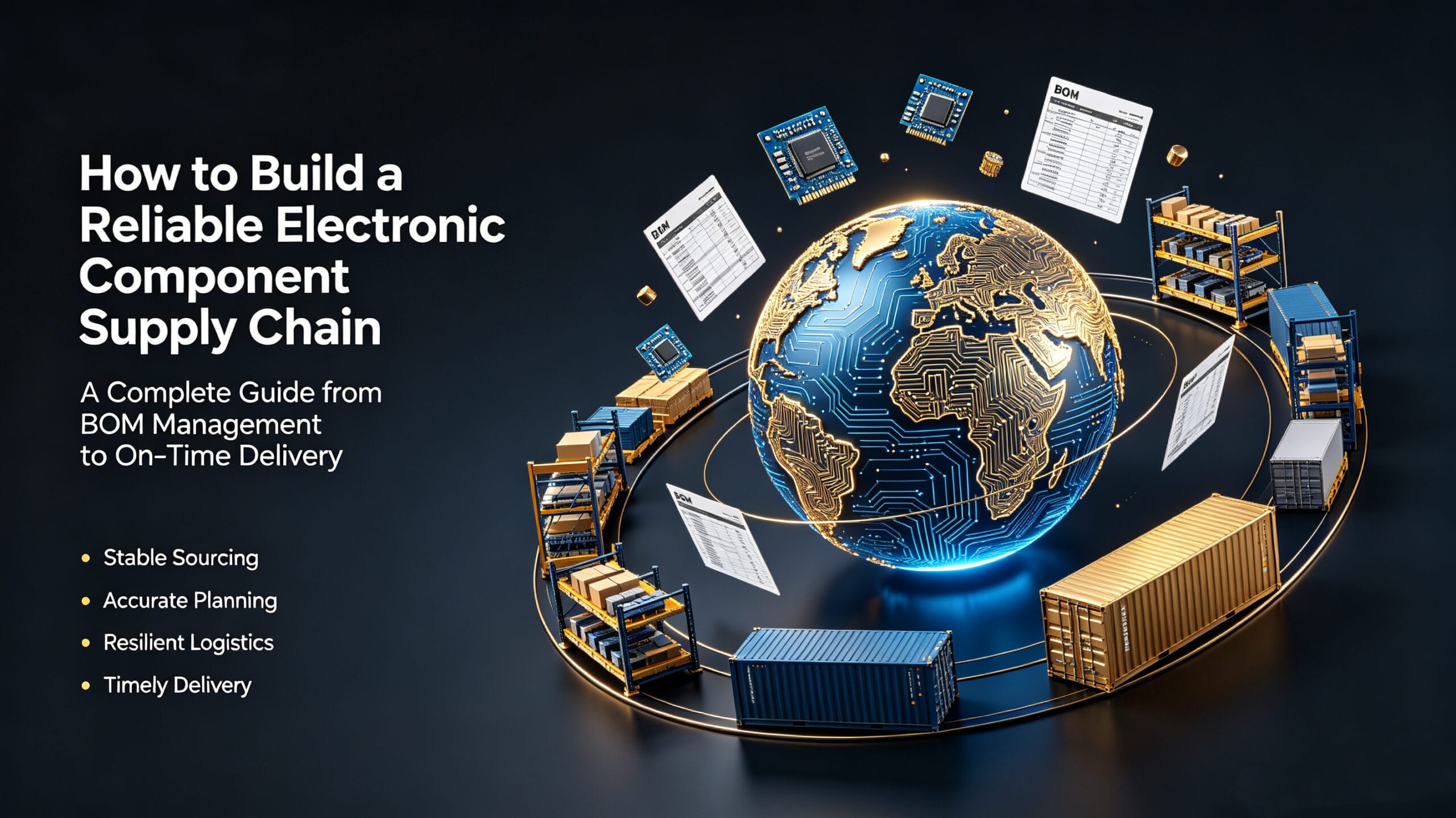
How to Build a Reliable Electronic Component Supply Chain: A Complete Guide from BOM Management to On-Time Delivery
How to Build a Reliable Electronic Component Supply Chain: A Complete Guide from BOM Management to On-Time Delivery Introduction In today’s rapidly changing electronics industry, reliable component sourcing has become a critical factor for manufacturers to maintain stable production and meet market demands. From semiconductor shortages and extended lead times to component obsolescence and price fluctuations, companies face increasing challenges when managing their electronic component supply chains. For OEMs, EMS providers, and electronics manufacturers, building a reliable sourcing strategy is no longer only about finding available parts. It requires effective BOM management, supplier evaluation, quality control, and long-term supply planning. This article explores how companies can improve their electronic component sourcing process and build a more resilient supply chain.———————— Electronic components are the foundation of modern products, including industrial equipment, automotive systems, consumer electronics, medical devices, and IoT applications. However, the semiconductor market is highly dynamic. Supply availability can change quickly due to: Increasing global demandSemiconductor manufacturing capacity limitationsMarket fluctuationsProduct lifecycle changesGeopolitical factors A shortage of a single critical component can delay an entire production schedule. Therefore, companies need a proactive sourcing strategy to reduce supply risks and maintain production continuity. A Bill of Materials (BOM) contains all components required to manufacture an electronic product. Effective BOM management helps companies: Identify high-risk componentsMonitor inventory availabilityEvaluate alternative solutionsControl procurement costsReduce production delays A professional sourcing partner can analyze BOM requirements and provide solutions based on: Part availabilityManufacturer statusMarket conditionsLead time requirementsCost considerations This allows manufacturers to make better purchasing decisions. Some semiconductor components may have limited stock or unstable supply. This is especially common for: Microcontrollers (MCUs)Memory ICsPower Management ICsAnalog ICsFPGA devices Finding reliable supply channels is essential to avoid unexpected production interruptions. 2) Long Lead Times Semiconductor manufacturing often requires months of production planning. Unexpected demand changes can extend delivery schedules. Companies need suppliers who can provide: Accurate stock informationReal-time market updatesFlexible sourcing solutions3) Component Obsolescence and EOL Risks Electronic components may reach: End of Life (EOL)Last Time Buy (LTB)Manufacturer discontinuation Without early planning, manufacturers may face redesign costs or production risks. 4) Quality and Traceability For electronic manufacturers, component quality
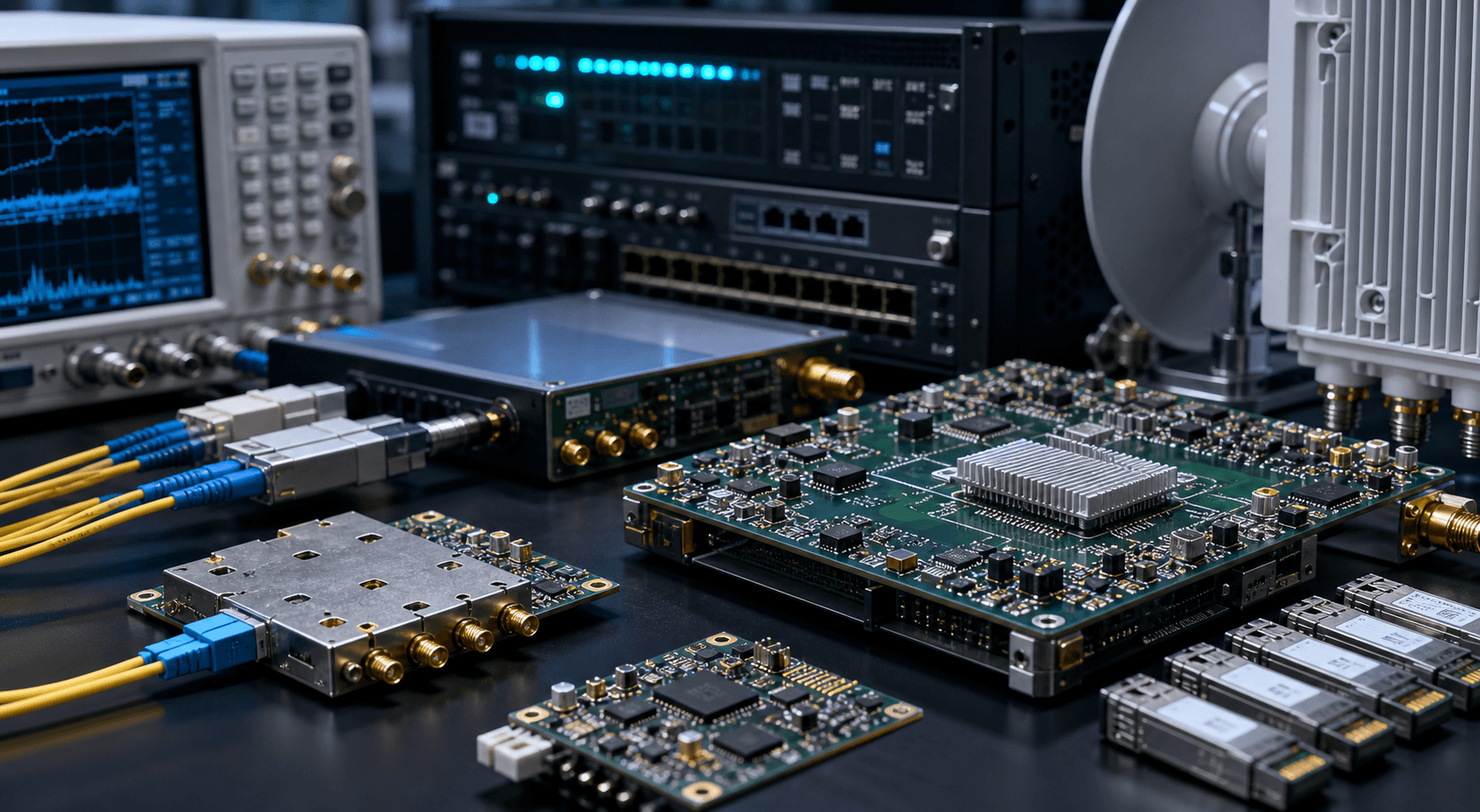
Core Electronic Components in Communication Infrastructure
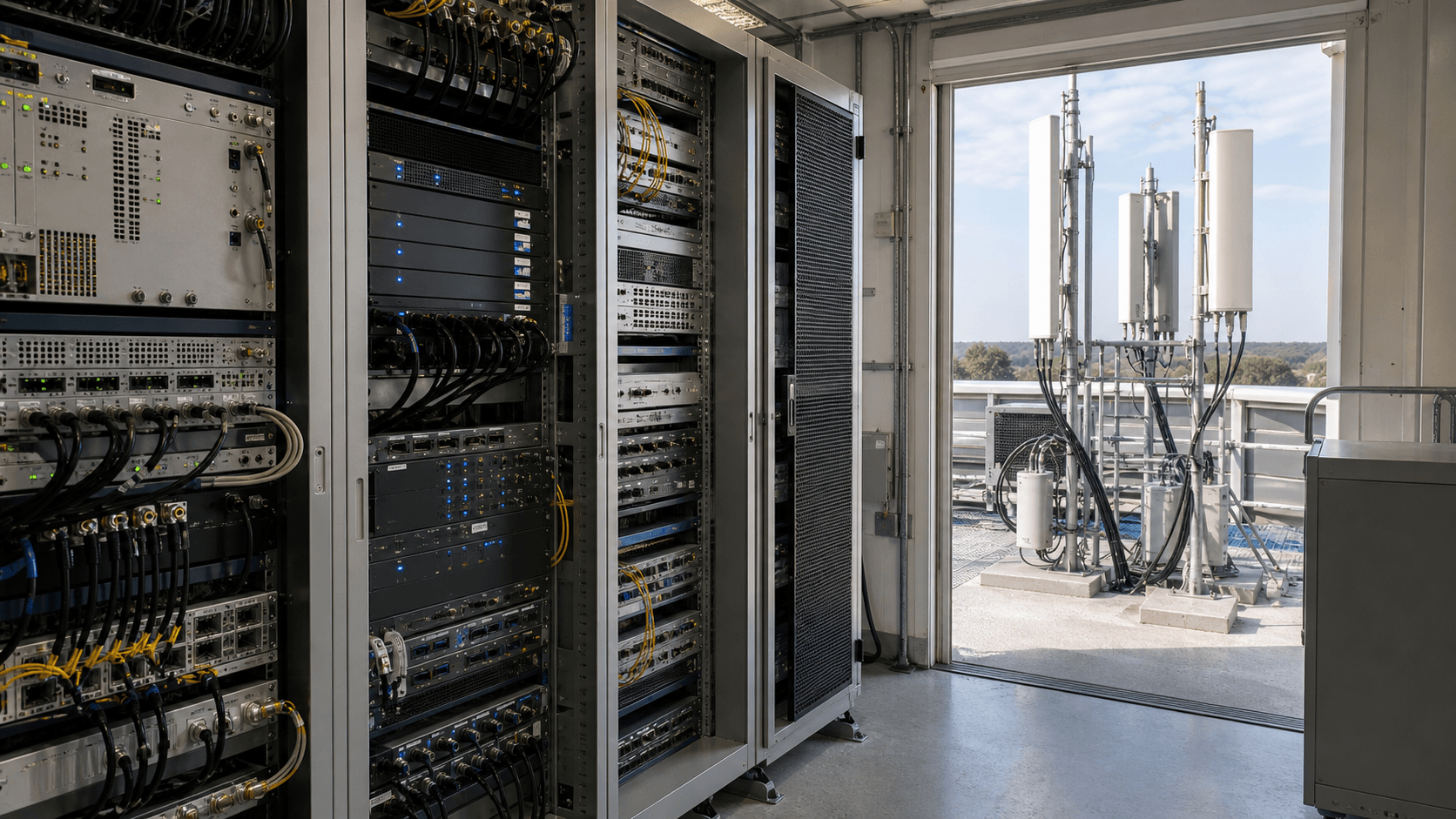
Communication infrastructure depends on RF devices, processors, timing chips and power components to support stable high-speed networks. Communication infrastructure is built on many layers of electronic hardware. From base stations and telecom cabinets to network gateways and RF modules, each system requires reliable semiconductor components to maintain stable data transmission. RF front-end components are often the first focus. Power amplifiers, low-noise amplifiers, filters, switches and RF transceivers help manage signal transmission and reception. These components are important for wireless coverage, signal quality and network capacity. Baseband and data processing are handled by processors, DSPs, FPGAs or network SoCs. These chips process large volumes of data and support the communication protocols used in modern telecom systems. Timing and synchronization are also essential. High-precision clock chips help keep equipment synchronized, especially in systems where timing accuracy affects network performance. Power management components support the entire platform. DC-DC converters, PMICs, power modules and protection devices help improve system efficiency and stability. For communication equipment manufacturers, component selection must consider performance, thermal behavior, lifecycle, availability and quality consistency. A dependable chip supply partner can help reduce design risk and support long-term deployment.
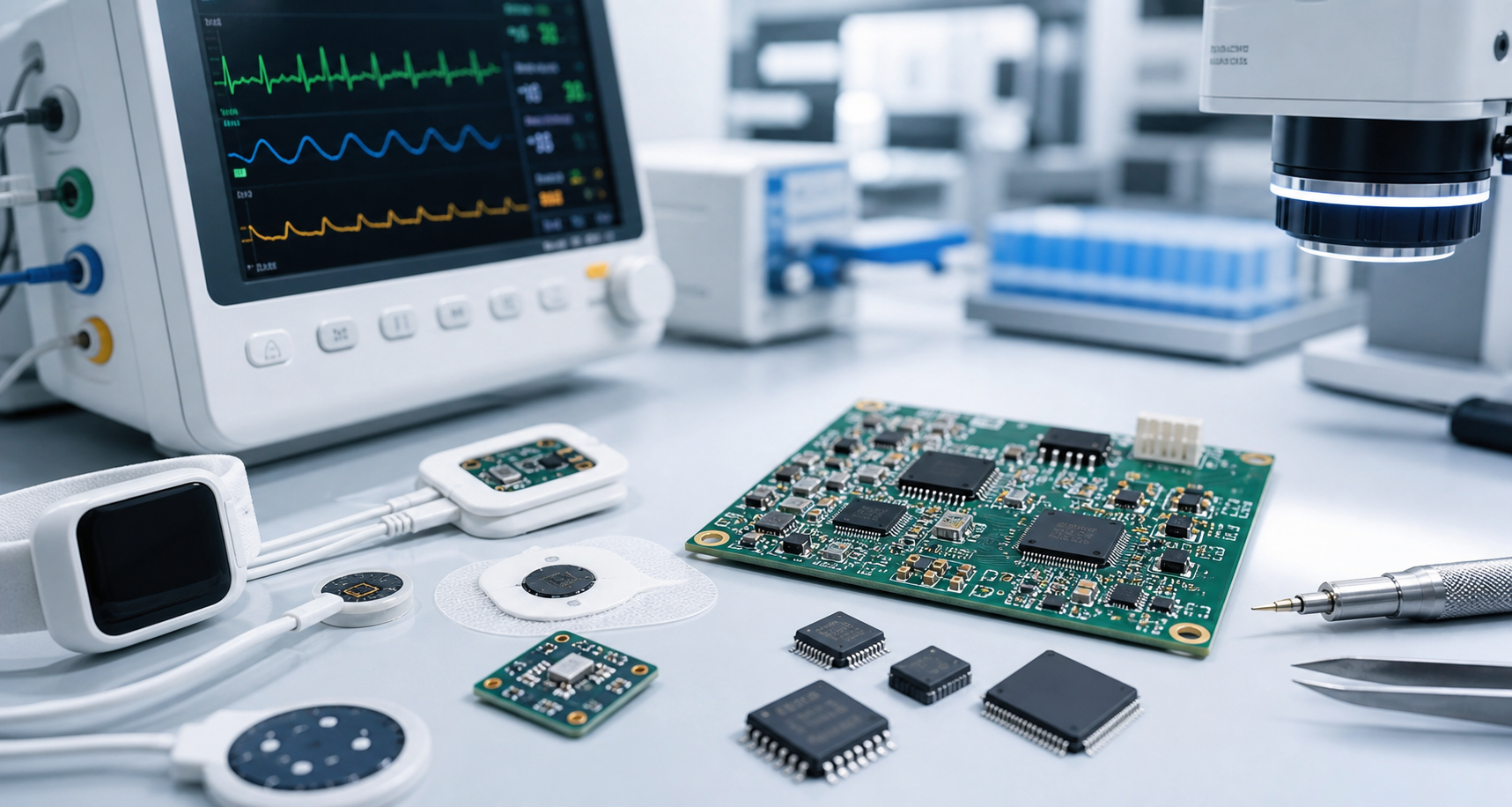
How Semiconductor Components Support Medical Device Design
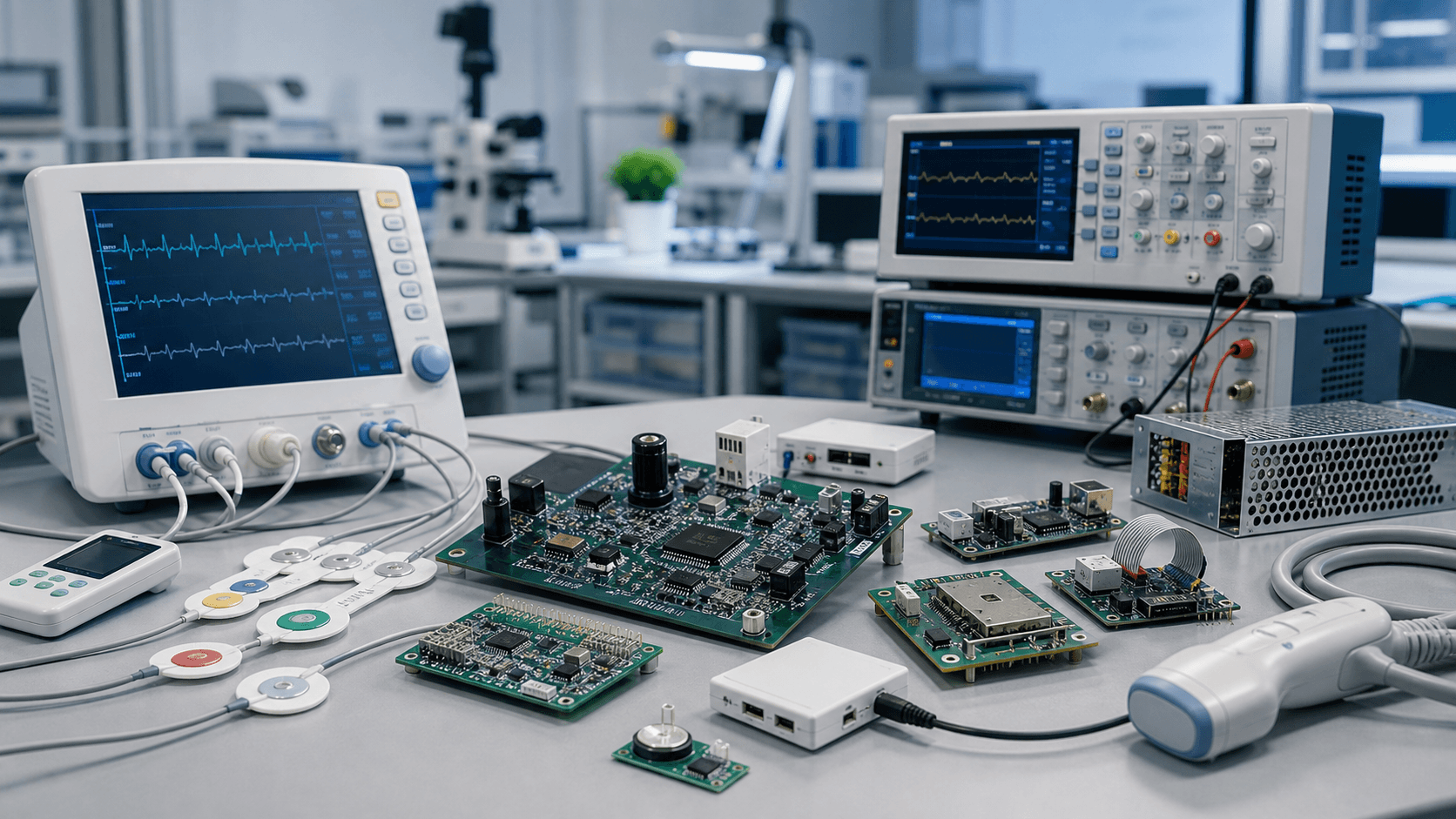
Medical devices depend on precise sensing, stable processing, wireless connectivity and safe power design to support reliable healthcare applications. Medical devices require electronic components that are accurate, stable and carefully selected. Whether the product is a patient monitor, wearable sensor, diagnostic instrument or portable healthcare device, semiconductor components play a key role in the final performance. The first layer is signal acquisition. ECG, EEG, PPG and other biosignal applications often use analog front-end chips, amplifiers and high-resolution ADCs to capture weak physiological signals. These chips help convert small analog signals into data that can be processed by the system. The second layer is control and processing. Low-power MCUs are widely used in portable medical devices, while higher-performance processors may be used in devices with displays, data storage or advanced user interfaces. Connectivity is also becoming more important. Bluetooth, Wi-Fi and IoT communication chips allow medical devices to transfer data to mobile apps, gateways or cloud platforms. Power and isolation should not be ignored. Battery management ICs, PMICs, isolated power modules and digital isolation chips help improve device safety and reliability. A strong medical electronics supply chain should focus not only on part numbers, but also on long-term availability, quality control and suitable replacement options.