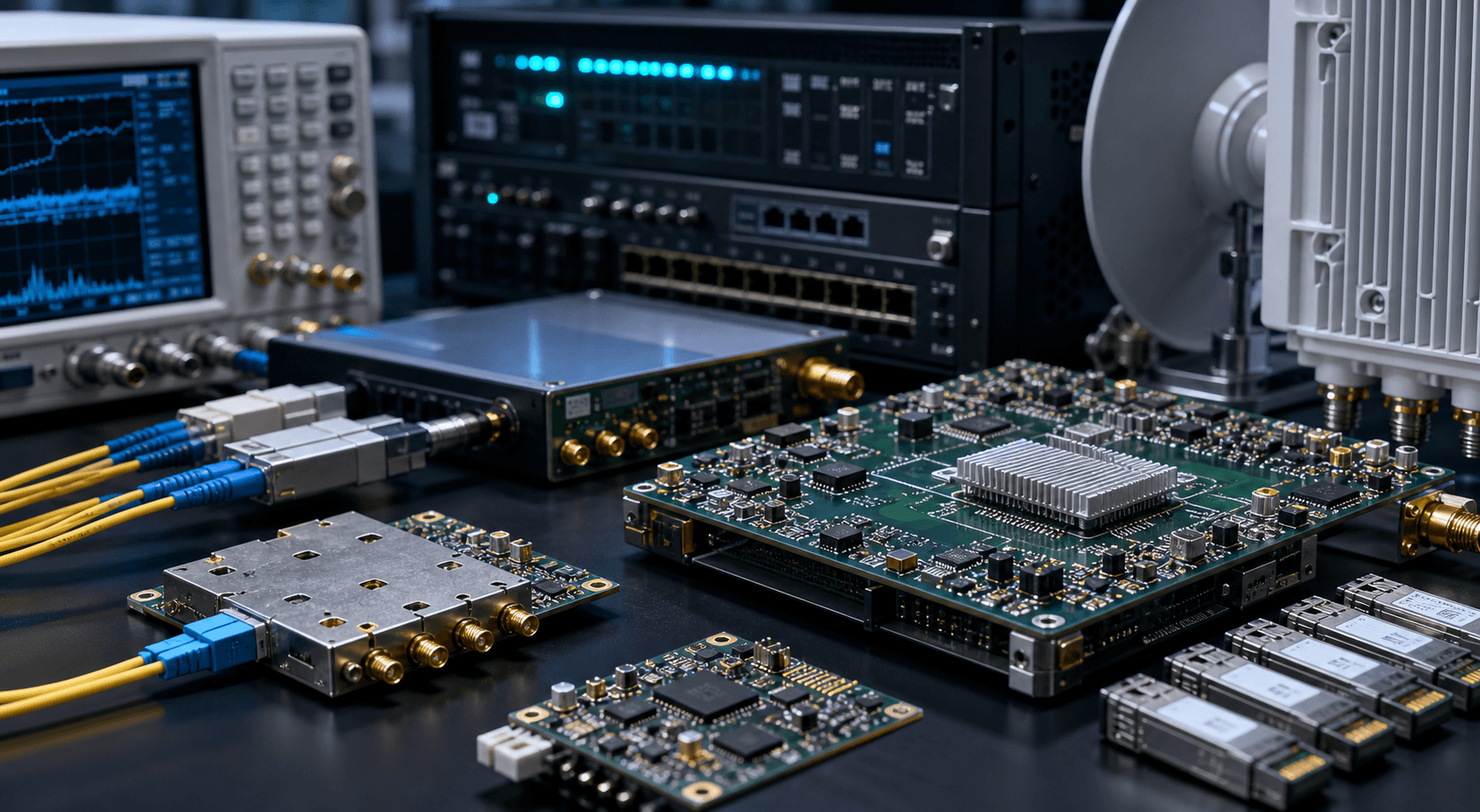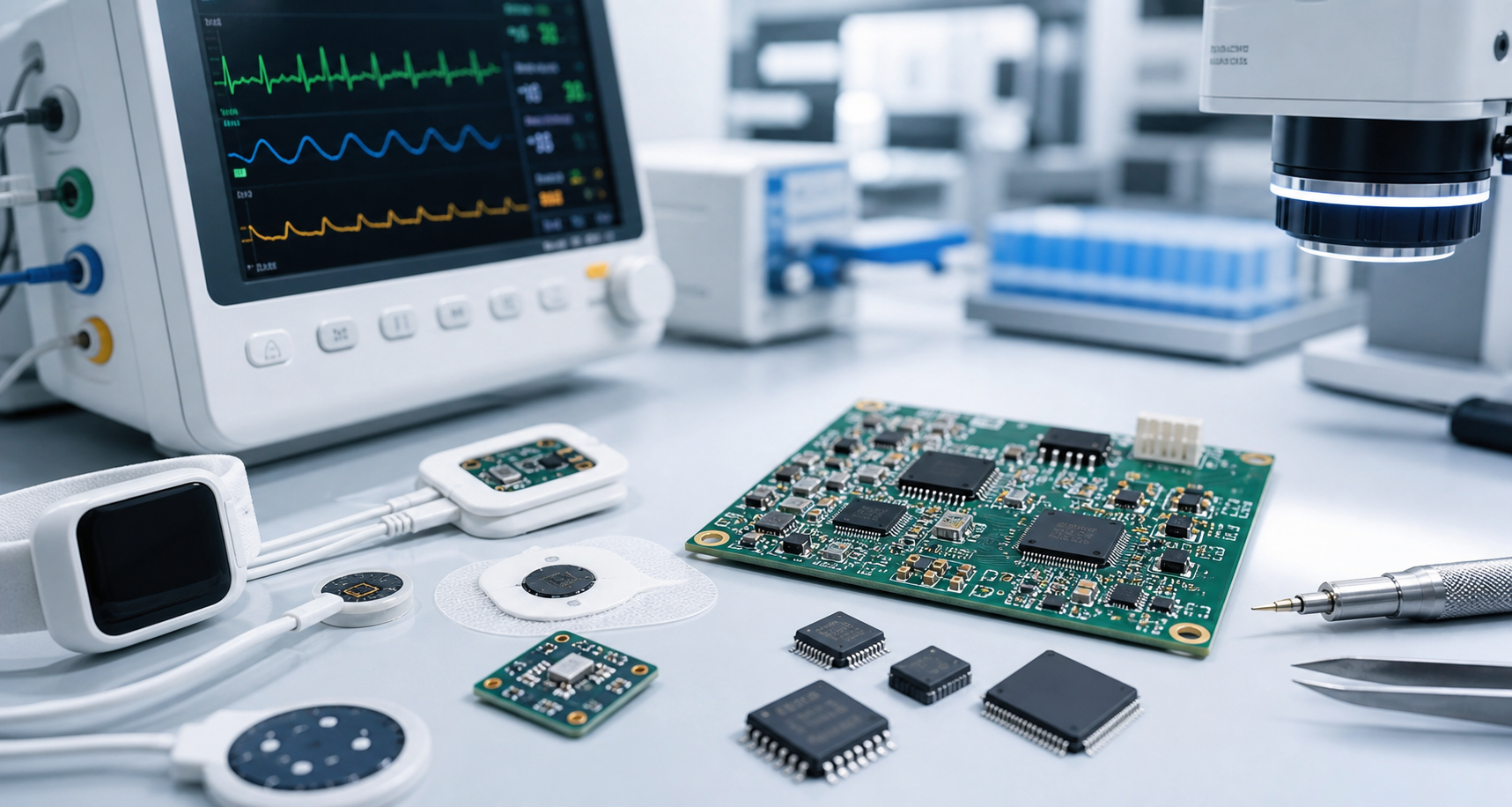
Modern drones rely on a compact mix of controllers, sensors, RF chips and power devices to deliver stable flight, accurate positioning and reliable communication.
Drones are no longer simple flying platforms. From industrial inspection to mapping and logistics, modern UAV systems depend on a dense electronic architecture built around multiple chip categories.
At the center of most drone designs is the flight control unit. This part usually combines an MCU or processor with motion sensors such as IMUs, barometers and magnetometers. These components help the drone understand its position, movement and altitude in real time.
Communication is another important layer. RF transceivers, wireless modules and video transmission chips allow the aircraft to connect with remote controllers, ground stations and image transmission systems. For higher-end applications, edge AI processors and vision chips may also be used for object recognition, obstacle avoidance and autonomous navigation.
Power management is equally critical. ESC control chips, MOSFETs, gate drivers and DC-DC converters help manage motor output, battery efficiency and system stability.
For component buyers, drone applications often require a balanced selection of performance, reliability, size and supply availability. Choosing the right chip solution can directly affect flight stability, communication distance and product lifetime.